7 small worlds to step into, then read more closely.
Japanese kawaii is not one look. Set them side by side in the same light and at the same scale, and the differences stop being vague: colour, shape, material, and how much room each thing is given.
Kawaii Kinds · Kawaii Style Atlas · Japanese Kawaii
AI-generated · not a product photo
Compass Check
Compare first, then name what you are seeing.
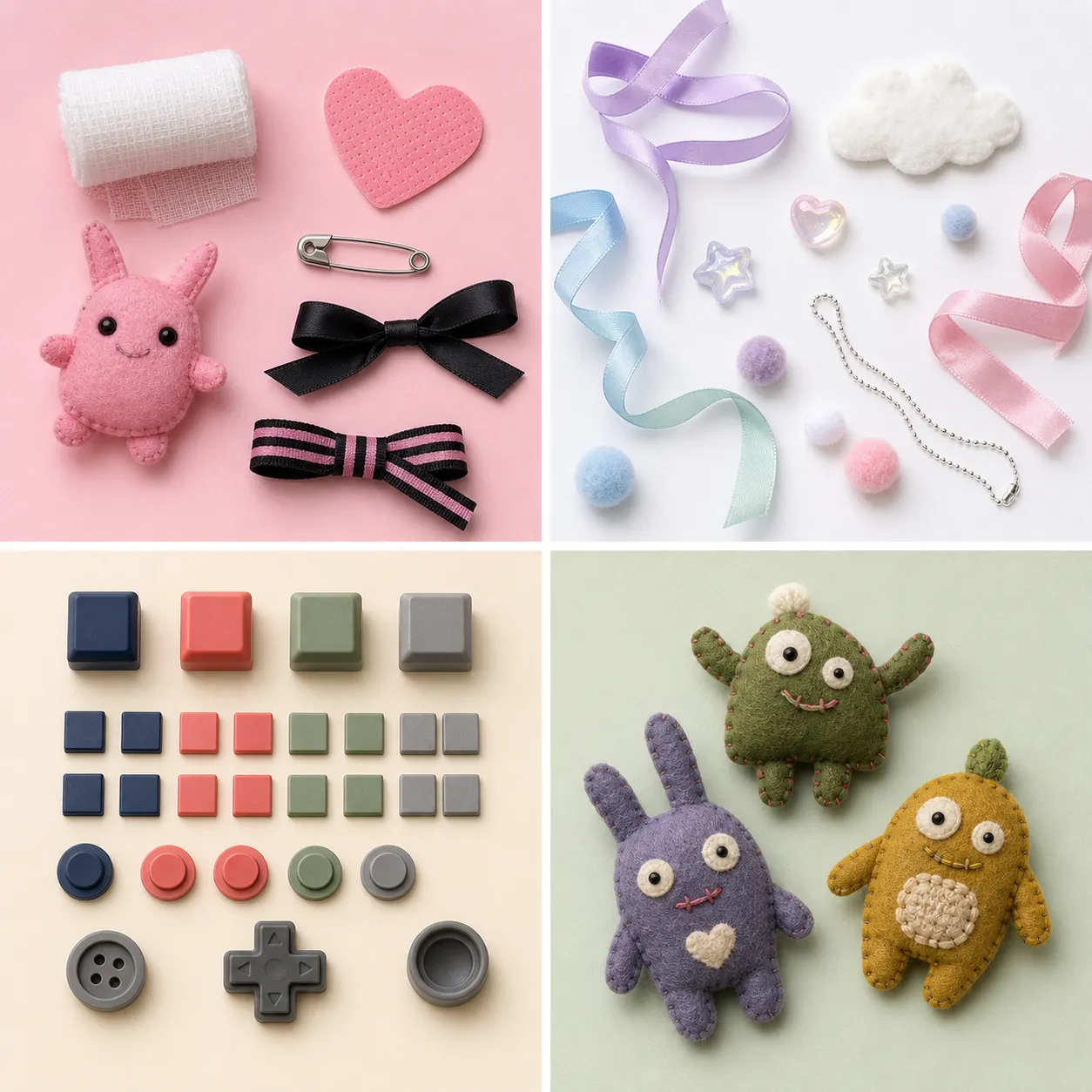
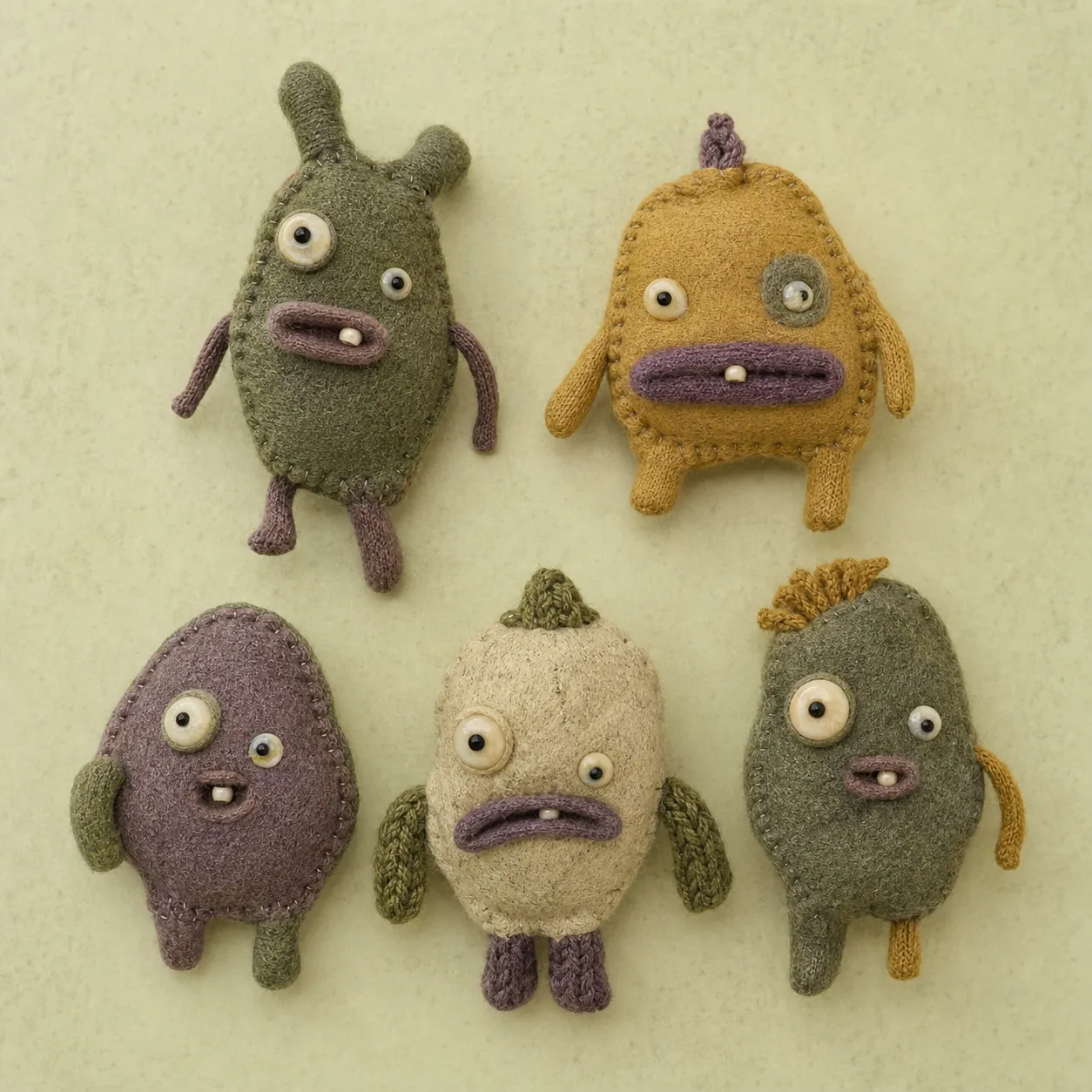
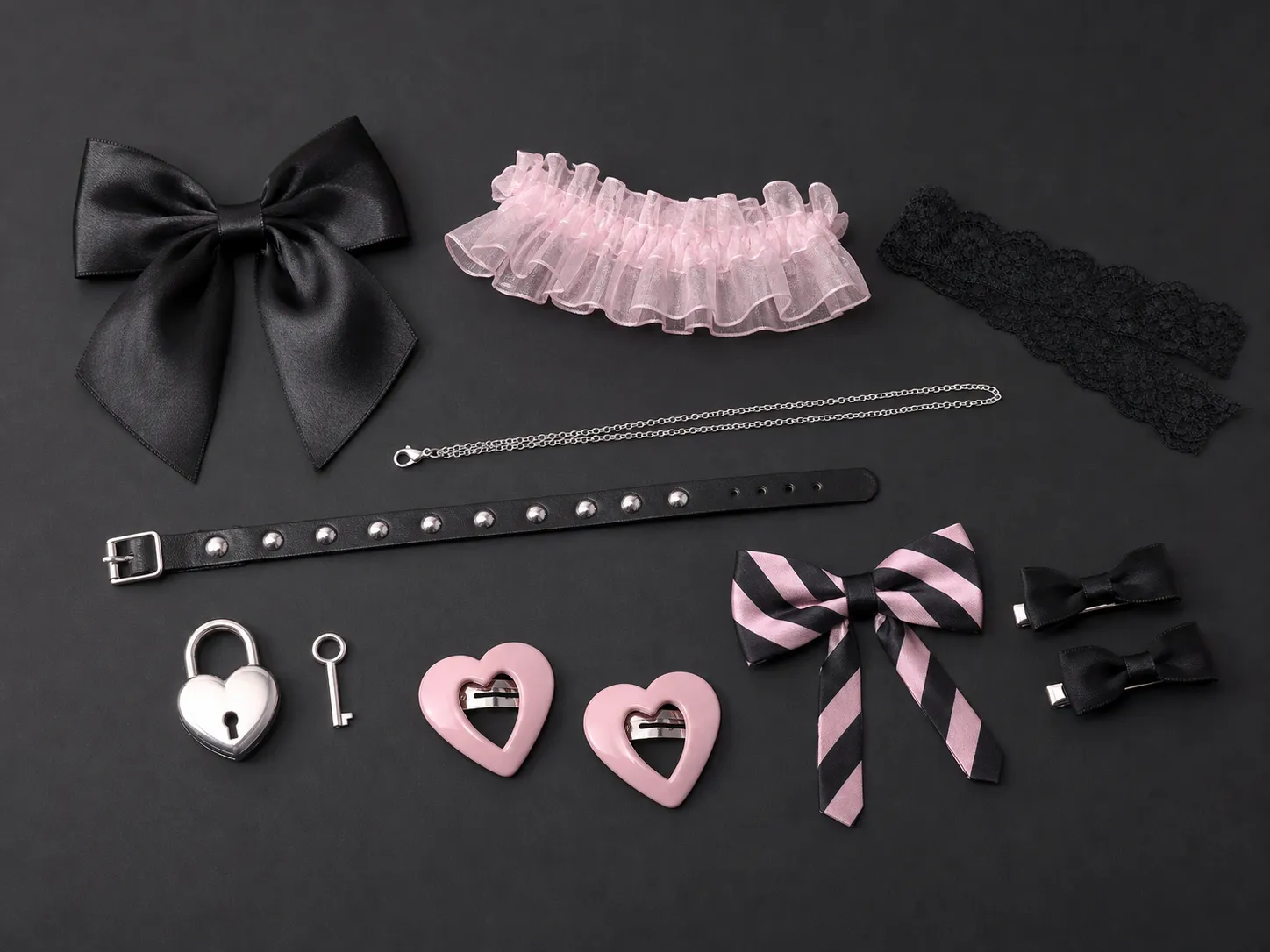
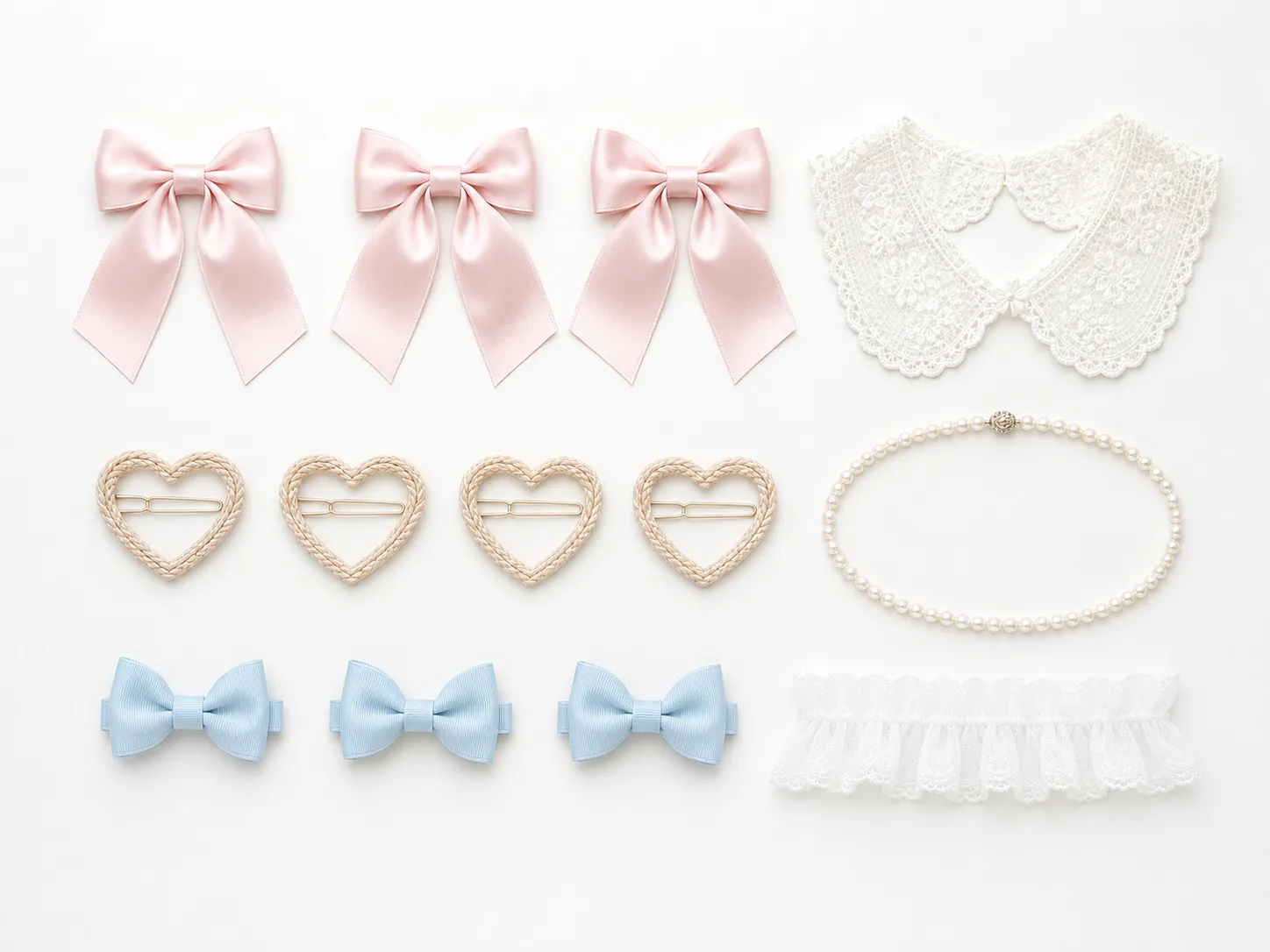
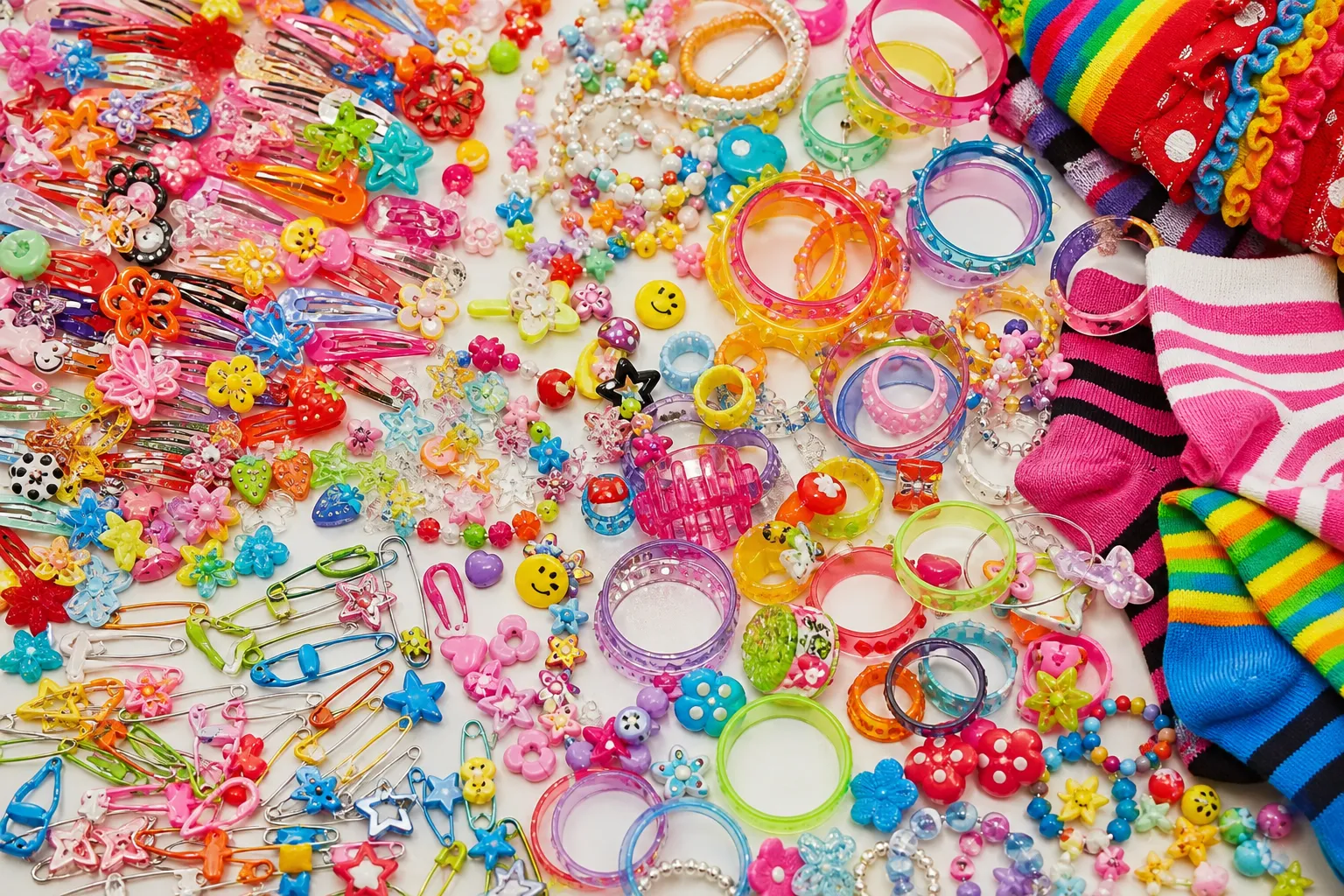
The tray above compares four of them; the cards below give every style its own frame at the same size, including one the tray predates. Every image here is editorial rather than a product photo — the difference lives in the objects, the colours, and the space between them.
01
01 · Style Atlas
Choose a world before you choose a label.
Each specimen is made to be read at a glance and returned to slowly. All 7 now have a Field Note behind them — but not the same kind of note, because they are not documented the same way.
AI-generated · not a product photo
Full field note
病みかわいいYami Kawaii
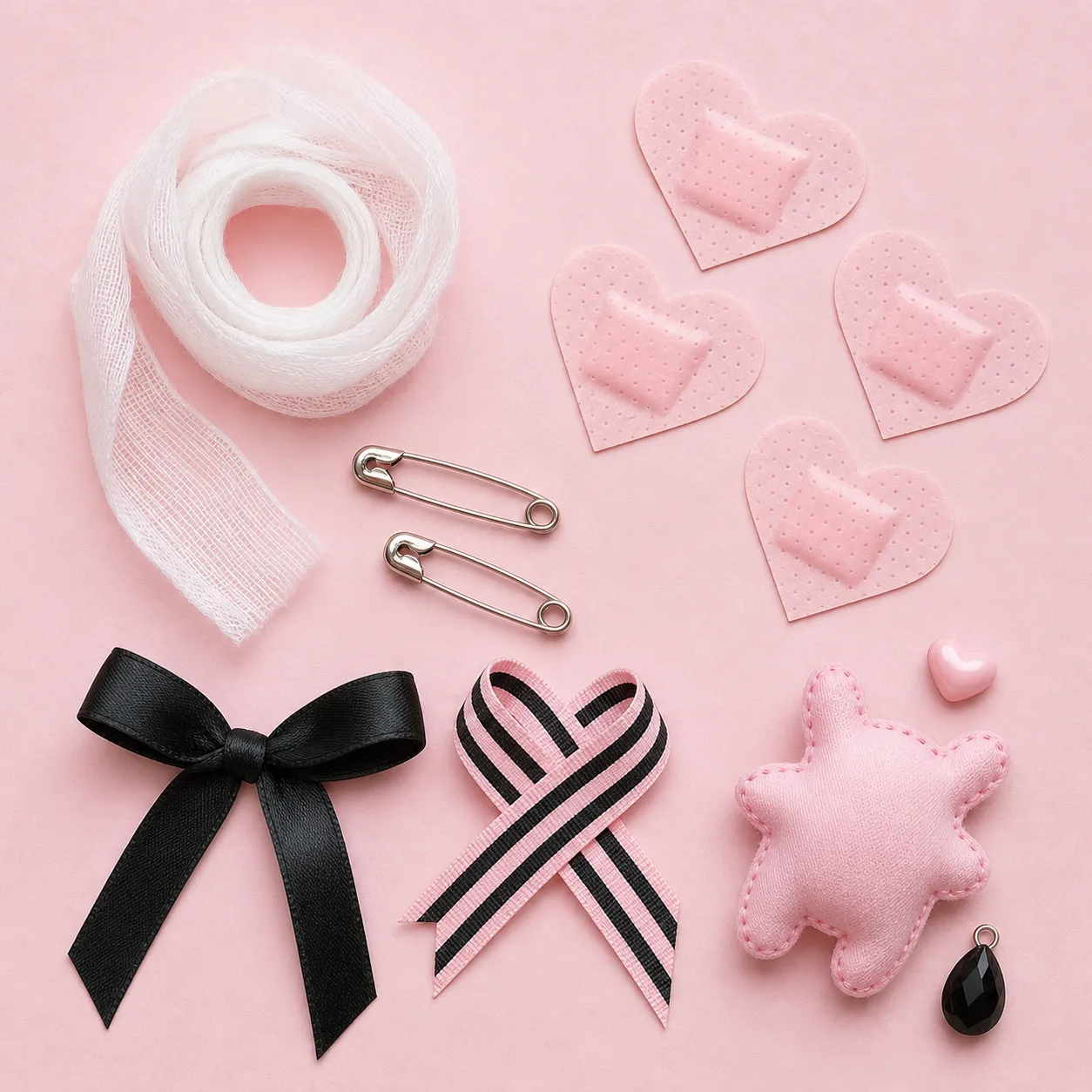
Gauze, heart-shaped plasters, and safety pins: the tools of being looked after, remade as things you would want to keep. One black bow and one dark drop are all the darkness it needs.
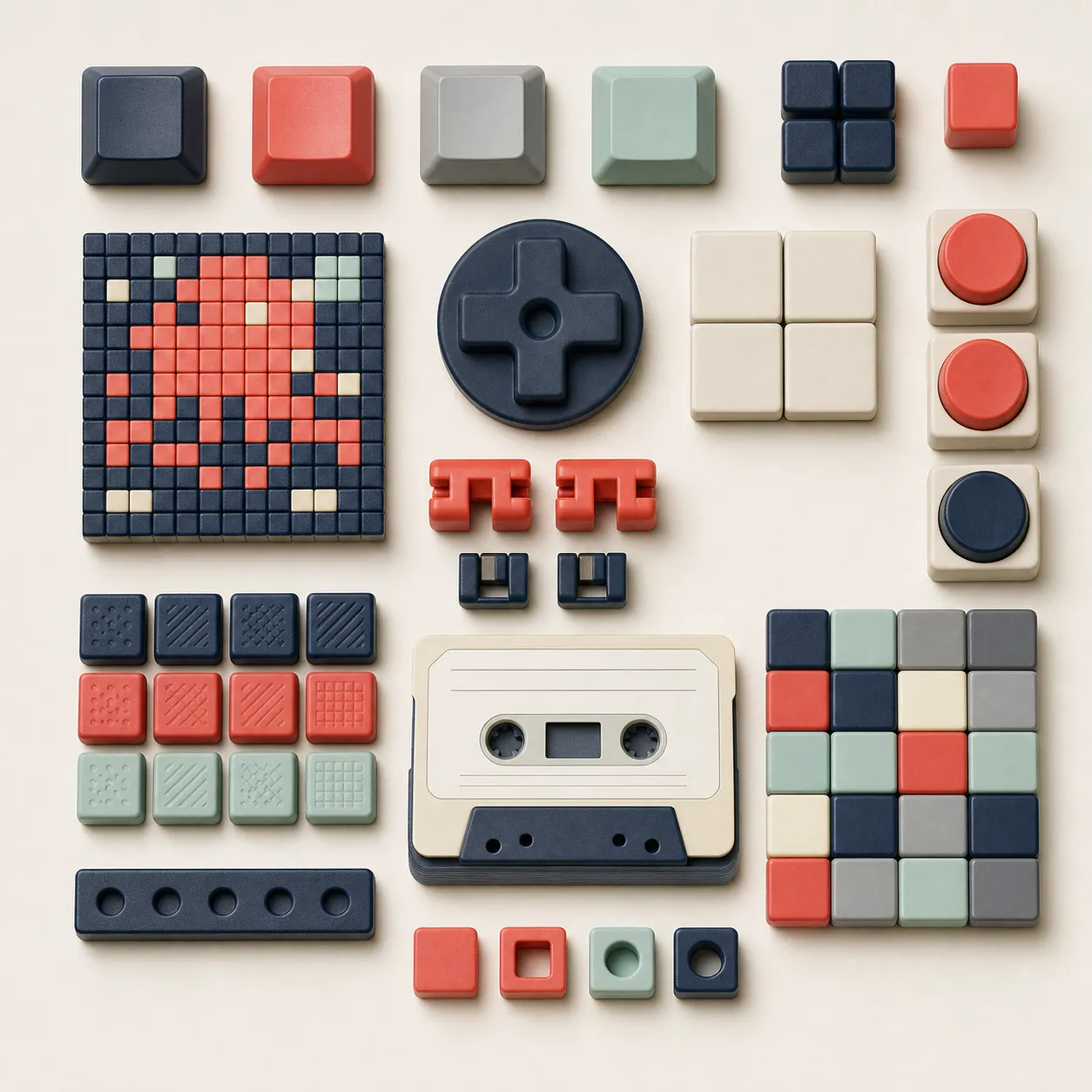
Square keys, a directional pad, and a cassette that was never a cassette. The colours are the muted plastics of old hardware — navy, coral, sage, cream — sorted like parts in a tray.
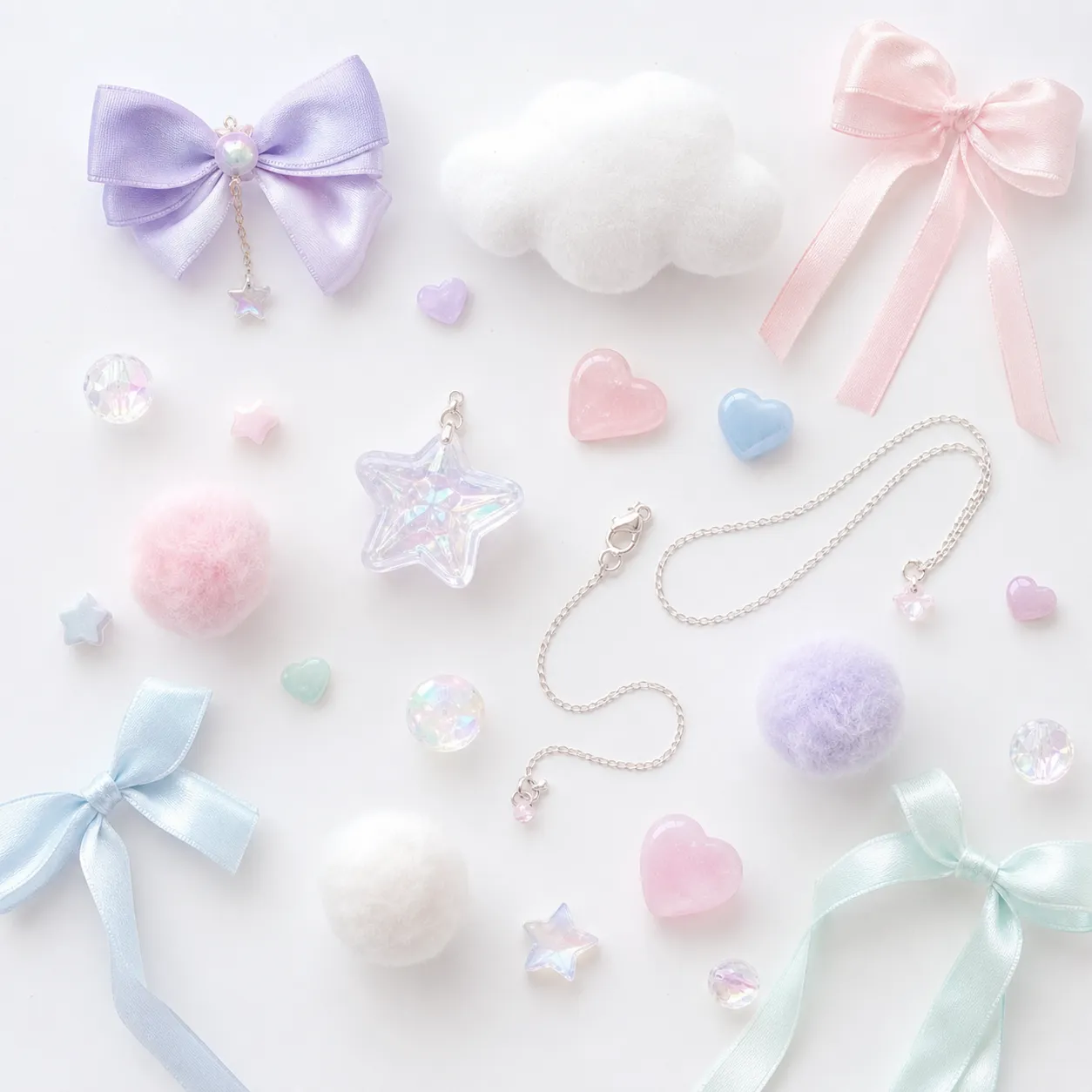
Nothing touches anything else. Pale ribbons, a felted cloud, and iridescent stars sit far apart on white, and the space left around each one is as much the style as the objects are.
Five felt creatures whose eyes do not match and whose mouths have given up. Every seam is visible, no two limbs are the same length, and you want to pick one up anyway.
Two colours and no more: black against baby pink. A satin bow and an organza frill on one side of the tray, chain, studs and a heart-shaped padlock on the other, and one striped bow wearing both at once.
Count them: three identical pink bows, four identical heart clips, three identical blue ones. Pale pink, beige, white and blue, lined up in rows with no dark anchor anywhere.
It covers words and visual grammar, styles and nearby terms, things and use, history and makers, and current observations. Food imagery and packaging can be read as design; food safety, storage, and import eligibility remain outside this reading room.
Analytics choice
Help us improve the reading paths?
With your permission, Google Analytics tells us which reading paths and source checks are useful. Advertising features and Google Signals stay off.