01 · Understand
One relationship is documented by the person who made it.
Ezaki describes the yume-kawaii image culture he encountered around pastel sailor clothing, strawberry milk, white rabbits, pink clouds, and short text posted over images. He then describes his own move: combining that field with yami and Menhera-chan. A separate commercial article asks directly how yume kawaii and yami kawaii differ, confirming that the comparison is not an editorial pairing invented for this page.
02 · Upstream notes
The definitions stay with their upstream notes.
This page crosses two existing notes. It does not maintain a second definition or visual checklist for either side.
03 · Tell them apart
Three differences, read from both sides.
Core construction
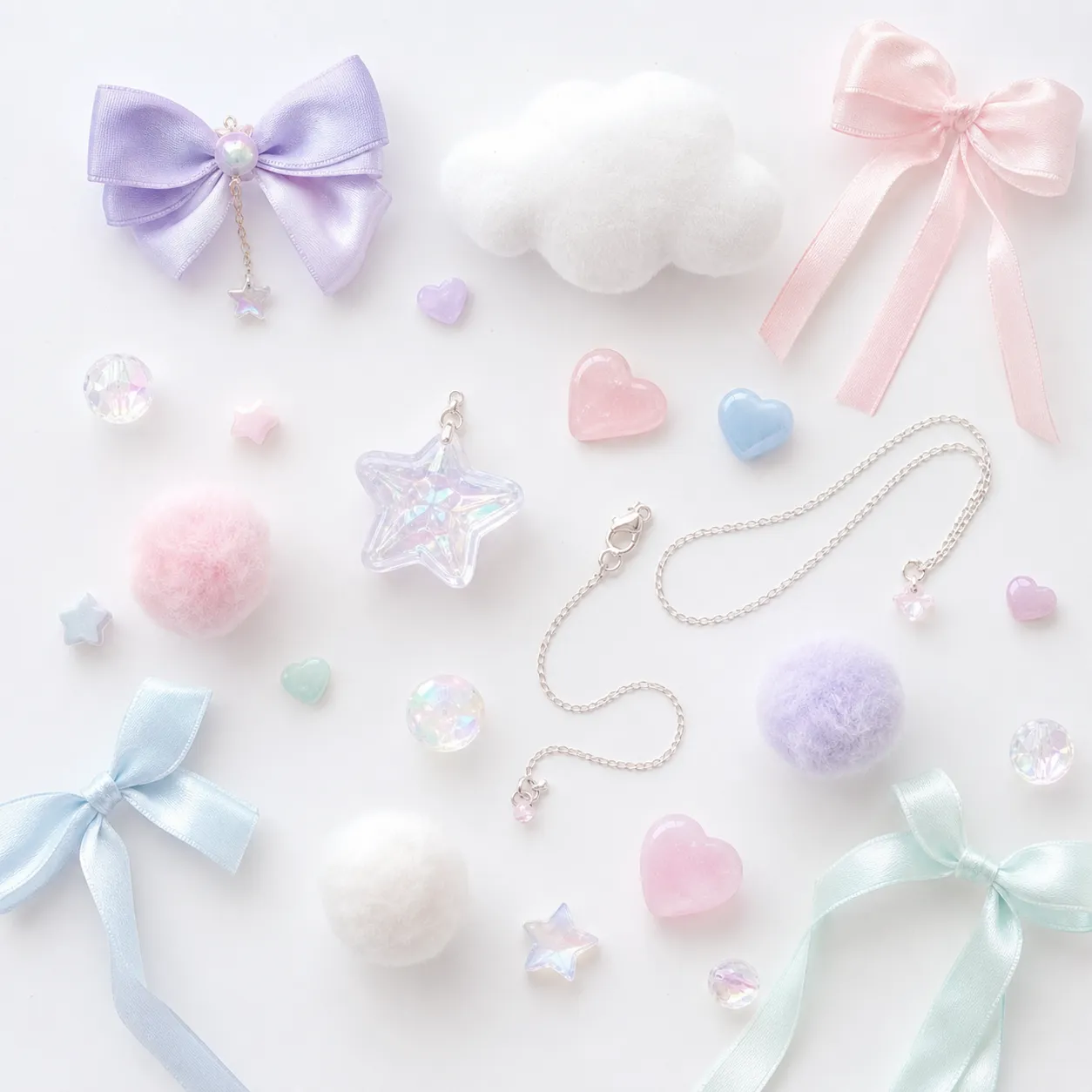
Yume Kawaii
Ezaki’s later account describes yume kawaii as “dreamlike cute” pushed toward fantasy and purified sweetness, without needing a negative component.
Source location: The passage defining yume kawaii as dreamlike and oriented toward fantasy beauty.
Yami Kawaii
In his origin account, Ezaki describes yami kawaii as a yume-kawaii base with yami added to it. The mixed construction is part of the name and of his own creative process.
Source location: The opening definition and origin sections.
Motif direction
Yume Kawaii
The remembered yume-kawaii field includes pastel sailor clothing, strawberry milk, white rabbits, and pink-cloud imagery: fantasy objects and soft image-world building.
Source location: The yume-kawaii boom section.
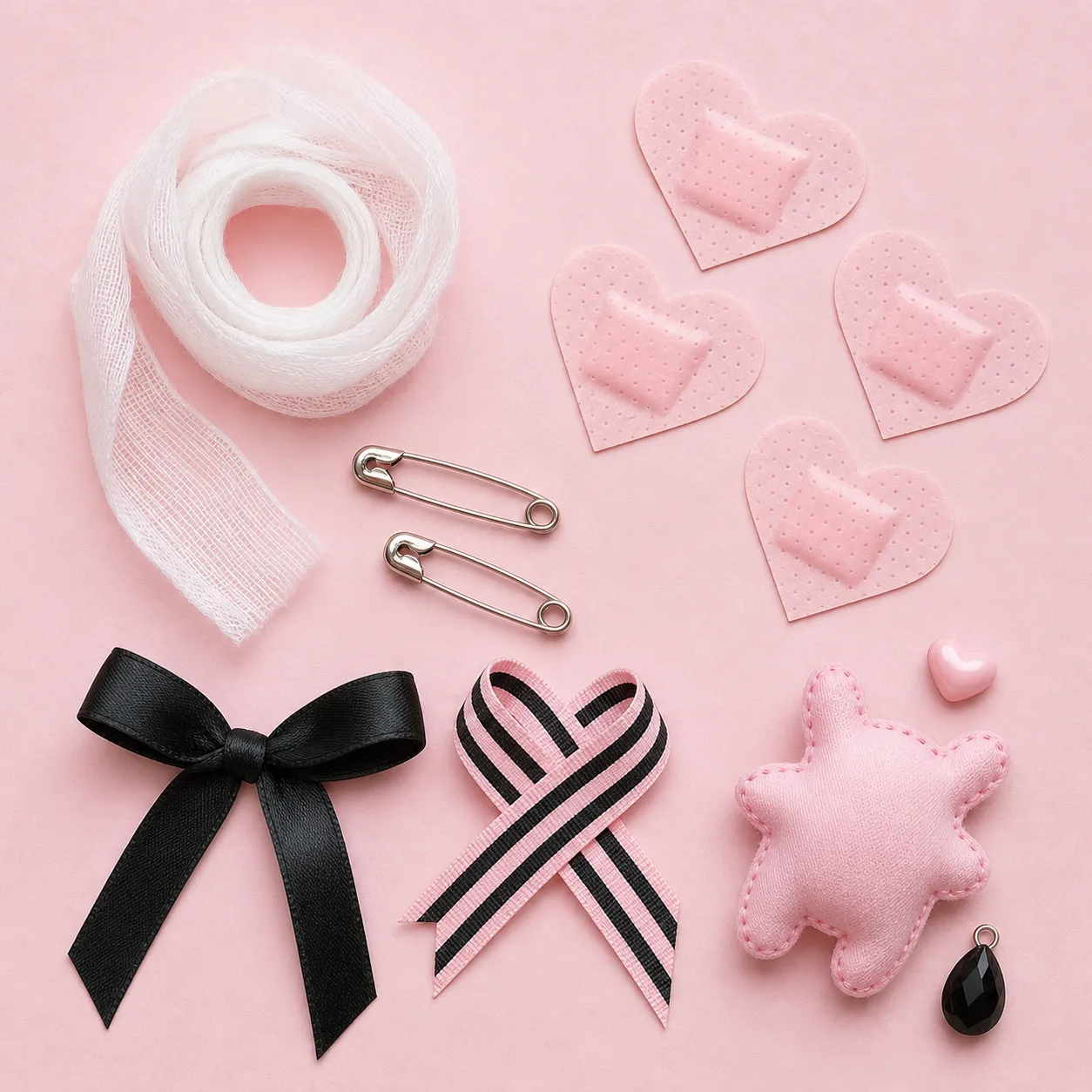
Yami Kawaii
Ezaki names medicine, bandages, eye patches, blood, blades, ropes, and severe kanji among the motifs used in the yami-kawaii work he describes.
Source location: The “What is yami kawaii?” section.
Recorded origin role
Yume Kawaii
Our yume-kawaii note does not contain a settled first-person record from one verified originator. Its current authority comes from documented use and from participants looking back at the image culture.
Source location: The upstream Yume Kawaii Source Ledger; origin remains Not verified.
Yami Kawaii
Yami kawaii has a named first-person record: Ezaki identifies himself as its namer and explains the combination he made.
Source location: The first-person history passage identifying the naming role.
04 · Shared ground
Pastel does not settle the name.
Both records can keep pink, softness, and a dreamlike surface in view. The difference is not “light colour versus dark colour.” Read the object vocabulary and the source label together. If a creator names the work, that first-party label is stronger than our reading of one colour.
05 · Boundary
Motifs are not a diagnosis.
Do not infer mental health, risk, personality, gender, relationships, or identity from an outfit or illustration. This page compares recorded image languages and one creator’s account. It does not classify the person using them.
06 · Relationship and sources
Relationship, scope, and Source Ledger
Ezaki’s first-person account of the origin of the yami-kawaii concept he named; not a universal present-day containment rule.
Confirmed for Ezaki’s origin account; open in later use.
The checked first-person record supports a directional origin statement: Ezaki says the yami-kawaii concept he named grew from yume kawaii with yami added. It does not prove that every current yami-kawaii object is a subset of every current yume-kawaii use. Draw the origin arrow only with that scope visible.
07 · Read next
Read each upstream note before using either name.