机と学び
Desk & Study
Make room for what your desk needs to do.
A desk is not a display case. Before adding anything, read what this one already has to do — write, make, study, play, put away — and let that decide what belongs on it.
Desk & Study / Three roles / One change
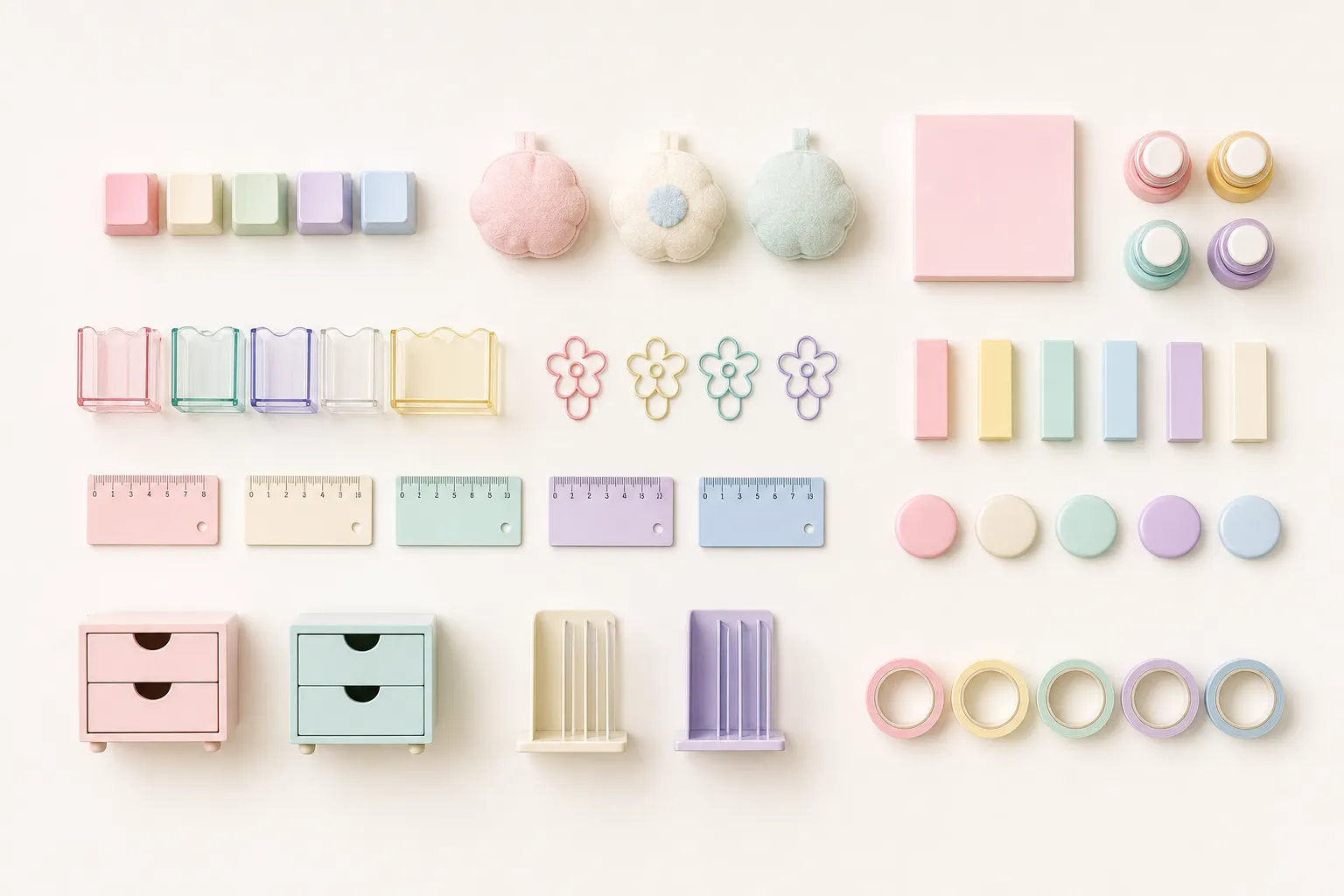
01 / Discover · Where to start
What does this desk have to do?
- Decide now
- Name the work your desk already carries, and the one role it is missing.
- Decide next
- Start from the feeling you want, then choose a single object that can carry it.
- Check
- Footprint, compatibility, and the maker's own description — before anything arrives.
Nothing here is a shopping list. Every step ends with something you can check yourself.
02 / Understand · Read the desk
Read the desk before you change it.
Start by naming what you need to write, make, study, play, or put away. Most desks are asked to do three or four of these at once, and the object that feels missing is usually the one serving whichever job you named last.
Write that list down before you look at anything for sale. A desk that has been read is much harder to sell things to.
03 / Compare · Choose one change
Choose one change.
A desk becomes more useful when one new object has a clear job, and less useful when four arrive together with none. Changing one thing at a time is what lets you see which change actually helped.
If two objects solve the same problem, you are choosing between them, not collecting both. Decide which job matters this month and leave the rest of the desk alone.
04 / Compare · Three roles
Three roles, not a shopping list.
Most desk objects do one of three things. Naming which one you are looking for keeps a search from turning into a list of everything that looked cute.
- Anchor
- Sets the feeling of the desk. Usually the largest surface you see first — a mat, a tray, the thing everything else sits on.
- Worker
- Helps the desk work. It earns its footprint by doing a job you would otherwise do worse, or not at all.
- Accent
- Repeats one small detail. It is allowed to be useless, as long as it stays small and there is only one of it.
You rarely need all three at once. Read which role your desk is missing, and let the other two wait.
05 / Check · Check the fit
Check the fit.
Before adding anything, measure the space it has to live in. Three checks catch most of what goes wrong, and all three can be done before you open a shop page.
Footprint
Measure the free surface you actually have, not the desk's full width. Compare that against the stated dimensions rather than against the photograph.
Compatibility
Switch type, key profile, cable length, clamp depth: the details that decide whether something fits your setup, not just your desk.
The maker's own words
Read the maker or shop description last, and let it override any photograph. A staged photo is not a specification.
Sizes, stock, and prices change. This page does not track them — the maker's own page does.
06 / Continue
Continue with a desk mood.
Start with the feeling you want, then choose one object that can carry it. The next reading walks four Japanese desk moods and the objects that belong to each.