紙と文房具
Stationery & Paper
Start with the page, not the pen.
A note to keep, a page to plan on, and a letter to send ask different things from paper. Start with the moment you are writing for, and the tools narrow themselves.
Stationery & Paper / Three uses / One page
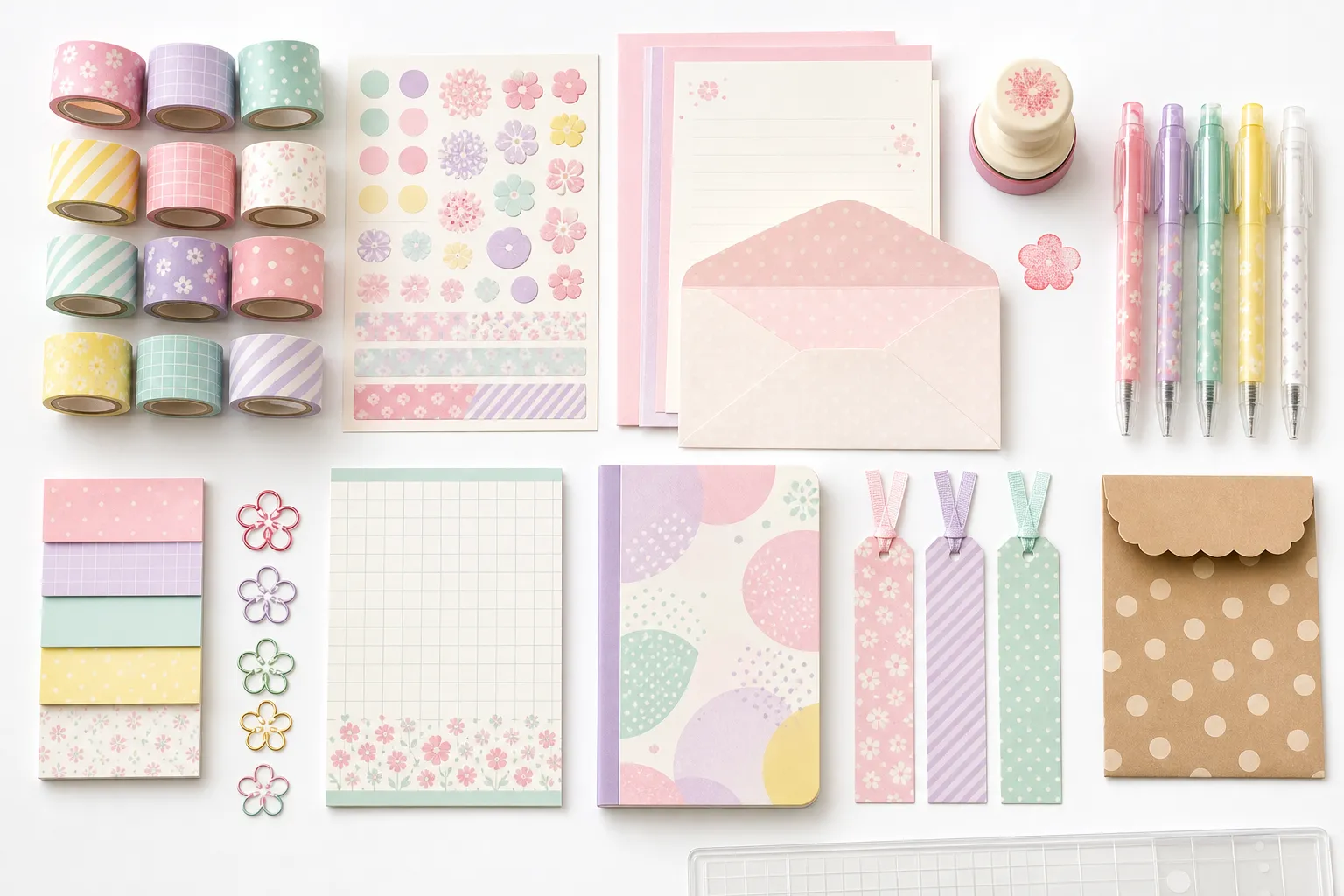
01 / Discover · Where to start
What are you writing for?
- Decide now
- Whether this moment is about writing, about keeping, or about marking.
- Decide next
- When the question becomes where paper lives while you work, continue to Desk & Study.
- Check
- Size, page format, whether it refills, and the maker's stated use.
Paper is easy to buy and hard to use well. This page is about the second part.
02 / Understand · Name the moment
Name the moment you are writing for.
A note to keep, a page to plan, and a letter to send ask different things from paper. One has to survive a bag, one has to be scanned or thrown away without regret, and one has to be opened by someone else.
Naming the moment first is what stops a stationery shop from becoming a wall of equally pretty options.
03 / Compare · Three uses
Write, keep, or mark.
Begin with the action, then learn which form of stationery helps it. Three actions cover most of what people actually do with paper.
- Write
- Making marks now. The paper has to take your ink without bleeding, and lie flat while your hand rests on it.
- Keep
- Holding something for later. The question moves from surface to structure: binding, refills, and whether pages come out without tearing.
- Mark
- Pointing at something you will return to. Tabs, seals, and small stamps do this, and they are judged by how they behave when removed.
Most stationery is sold on appearance and used by action. Choose on the second one.
04 / Check · Read the label
Read the label before the packaging.
Size, page format, refillability, and intended use matter more than a pleasing cover. Each of these is stated on the label, and each one changes how the thing can be used.
Size and page format
A5, B6, ruled, grid, blank, dot: the two lines on the back of the pack that decide most of how it feels to use.
Refillable or not
Whether this is a book you finish or a cover you keep. Refill systems are the detail most often assumed and least often stated.
Intended use
Fountain-pen safe, sticker friendly, scannable, archival: a maker states these when they are true, and stays quiet when they are not.
Formats and refill compatibility both change between editions. Confirm them on the maker's own description rather than on a photograph of the packaging.
05 / Check · Where to look
See how a maker states it.
The checklist above is only useful if you can see it in practice. The maker below publishes its own product descriptions in Japanese, and reading two or three of them teaches the vocabulary faster than any glossary. This is a place to verify current terms, not a recommendation of any particular item.
- MIDORI official store (Designphil Inc.) — Official shop
How a Japanese maker states size, paper type and refill compatibility in its own words.
Checked
06 / Continue
Keep reading about paper.
For a closer look at sticker formats, open the flake-sticker guide. For where paper lives while you work, continue to Desk & Study.