01 · Understand
Two records with different kinds of authority.
Jirai-kei is a name that current Japanese fashion shops use for themselves: VOLCAN&APHRODITE uses it as a category label, while NOEMIE includes it in the brand’s own description. That confirms present commercial use of the term; it does not make either shop a neutral definition of the whole style.
Yami kawaii has a first-person naming record. Illustrator Bisuko Ezaki identifies himself as the creator of Menhera-chan and as a person who named and advocated yami kawaii. Official collaboration pages show where that creator’s work has appeared, but those shops remain commercial sources rather than independent definitions.
02 · Upstream notes
The definitions stay with their Field Notes.
Each side below is a direct route to the existing note. This derived page selects evidence-state differences; it does not maintain a second definition or visual checklist.
03 · Tell them apart
Use the record first; use the visual cues second.
Naming record
Jirai-kei
Current shops use the name directly, but the checked ledger does not contain a first-person record from one named originator.
Source location: VOLCAN category label and NOEMIE official brand description.
Yami Kawaii
A named creator identifies himself as the term’s namer and advocate.
Source location: Creator account passage identifying the naming and advocacy role.
Origin record
Jirai-kei
A Japanese editorial feature reports that the fashion term descends from a piece of internet slang used to judge women. This is a secondary account, not primary proof of the term’s origin.
Source location: FASHIONSNAP paragraph reporting the name’s lineage.
Yami Kawaii
The checked origin record is the creator’s own account of his work and role in naming the culture. It is first-person and interested, so the Source Ledger shows both strengths at once.
Source location: Creator account passage describing Menhera-chan and the term.
Visual support
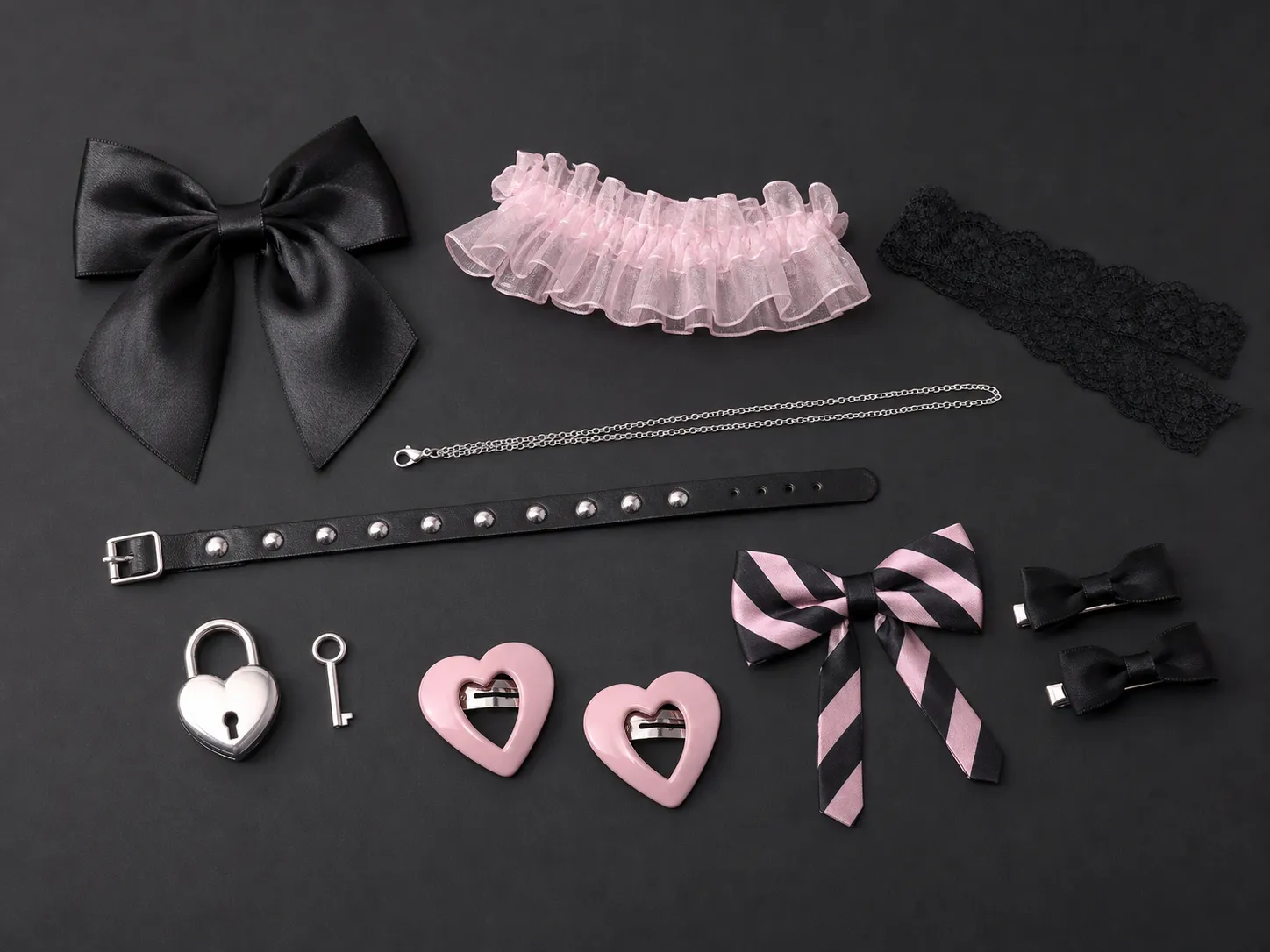
Jirai-kei
The secondary feature names black and pink, ribbons, frills, lace, chains, crosses, and studs. Our specimen narrows those reported elements into one editorial arrangement.
Source location: FASHIONSNAP paragraph listing colours and visual motifs.
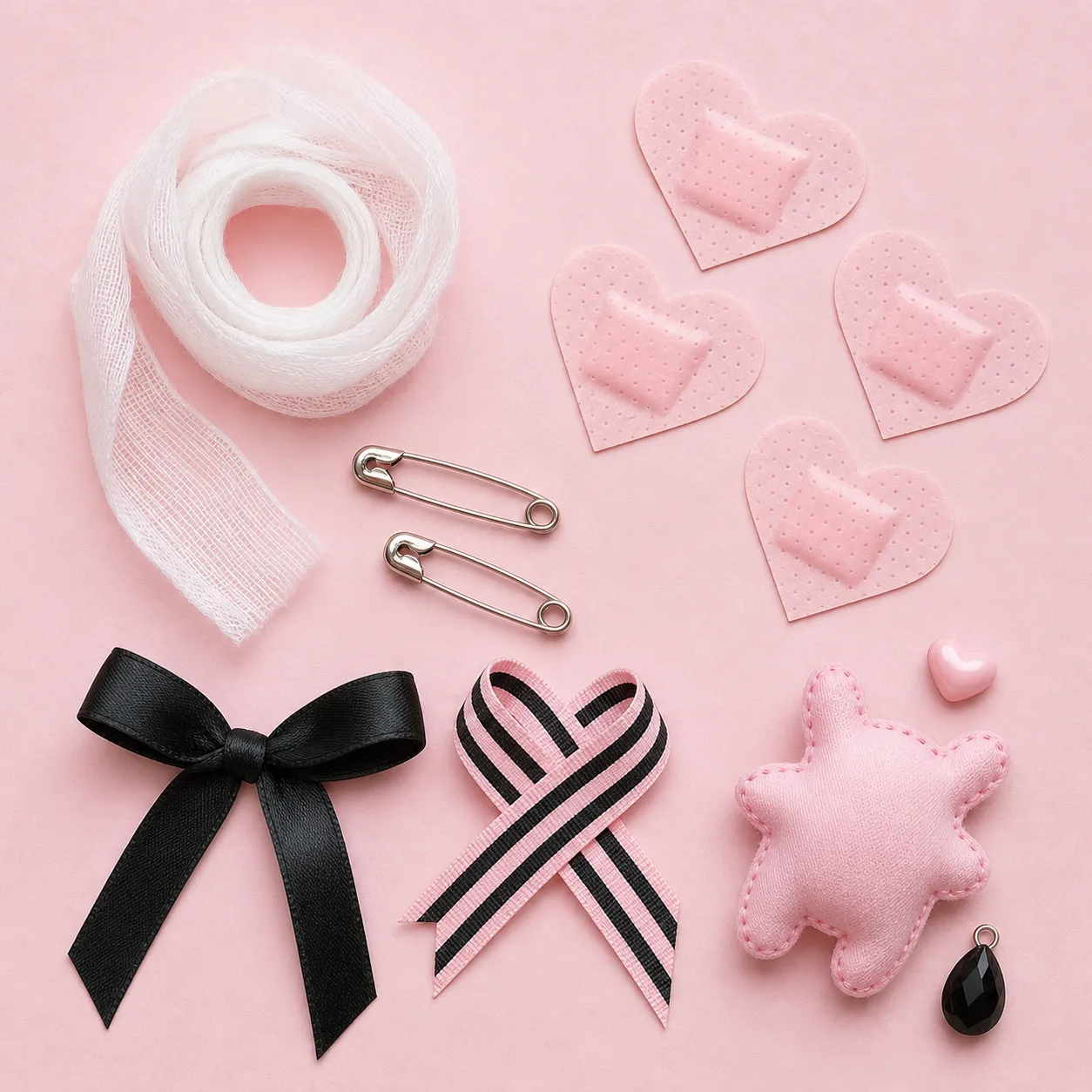
Yami Kawaii
The creator account establishes the naming record, but our current primary ledger does not provide a universal visual checklist. The Field Note therefore keeps its specimen cues explicitly editorial.
Source location: Creator account used for naming only; no universal visual checklist claimed.
Working decision
If a creator, collection, or shop names its own work, that first-party label is stronger than our reading of colour and motif. When no first-party label exists, describe what is visible instead of forcing either name.
04 · Boundary
Clothes are not a diagnosis.
Do not infer illness, risk, personality, romantic behaviour, gender, or identity from an outfit. The historical baggage of the words belongs in the guide because readers can otherwise misuse them; it does not grant permission to classify a person.
This comparison names garments, accessories, shop categories, and editorial specimens. It does not name the wearer.
05 · Nearby terms
Keep nearby words visible without inventing definitions.
06 · Sources and limits
Sources, interests, and the line we cannot draw.
Unconfirmed
Relationship: Unconfirmed. We did not find a primary source that establishes jirai-kei as a subset of yami kawaii, yami kawaii as a subset of jirai-kei, or one as a direct descendant of the other. The two may be discussed together; that is not the same as a verified hierarchy.
07 · Read next
Return to the full notes before using either name.