地雷系
Japanese Kawaii · Style Field Note
Sweet things and hard fittings, on the same tray.
Black against baby pink, ribbon against chain, lace against studs. The look is built on a standoff — and the name it goes by started life as an insult.
Kawaii Kinds · Style Field Note · checked 2026-07-27
Compass Check
Learn the name before you use it.
We write about the clothes. The word itself comes from somewhere harsher, and we say where, because a reader who does not know that can cause real offence with it.
01 · Understand
Where the name comes from.
地雷 means landmine. The fashion term descends from地雷女 — a piece of internet slang for a woman wholooks sweet but is, the slang implies, dangerous to get involved with. Our reference describes exactly that lineage. The clothes were named after a jibe about people.
So we use it for clothes and nothing else. If you take one thing from this note, make it this: jirai-kei describes a rack of garments; applied to a person it is an insult, and plenty of people who wear the style dislike the label for exactly that reason. Not a warning to avoid the word — the shops print it on their own category pages, so you will need it to find anything. Just so you know what you are holding.
02 · Understand
A small world
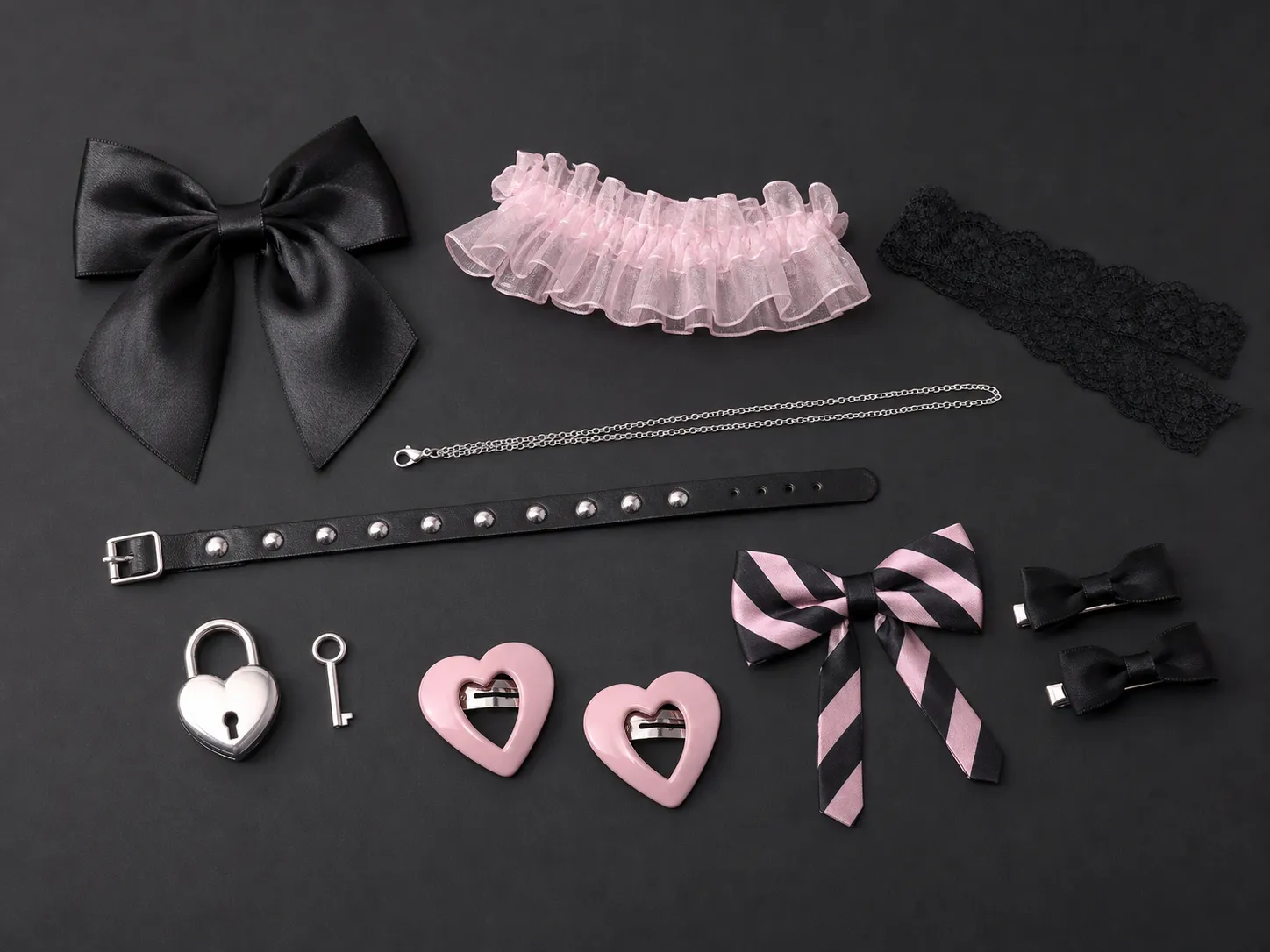
Everything on the tray above is either soft or hard, and the two are set against each other. A large black satin bow and a pink organza frill on one side; a fine silver chain, a leather belt set with studs, a heart-shaped padlock and its key on the other. A band of black lace sits between them, belonging to both — and one bow is striped in both colours at once, which is the whole style in a single object.
The palette is strict: black and baby pink, and almost nothing else. That narrowness is doing real work. Widen it and the effect loosens immediately — add lavender and you are close to another style altogether. The dark ground matters too; the same objects on white would read as party supplies.
03 · Look
Look for
These are the cues we use — an editorial reading rather than a definition, useful until they stop being useful.
- Two colours, held tight. Black with baby pink. Our reference describes this pairing as the base of the style, and the discipline of it is most of the effect.
- Girlish motifs meeting hardware. Ribbons, frills and lace on the same piece as chains and studs. Neither side wins.
- Fastenings used as ornament. Padlocks, buckles, safety pins and clasps worn where a bow would be, doing no fastening at all.
- Sweetness with a hard edge. If everything is soft, it is a different style. The standoff is the point.
04 · Check
Shops to check
Both shops below use the word for themselves — one as a category name on its own storefront, the other in how it describes the brand. That is our test. Other brands get called jirai-kei by third parties while describing themselves quite differently, and we do not put words in their mouths. A shop page is a place to verify its own current terms, not evidence that a particular item is available or suitable. Both were reachable when checked on 2026-07-27.
- VOLCAN&APHRODITE official jirai-kei category — Official shop
Official shop — check current stock, shipping and returns.
Checked
- NOEMIE official store — Official shop
Official shop — check current stock, shipping and returns.
Checked
- FASHIONSNAP feature on jirai-kei — Reference source
Japanese-language feature. The source for the origin of the name and for the colour and motif description above.
Checked
05 · Read next
A name can be evidence of harm as well as of style.
Four of the notes in this atlas describe how something looks. This one also has to describe what saying it does. That is not a flaw in the style — the clothes are made, sold and worn in large numbers, by people who chose them. It is a fact about the word, and a guide that left it out would be easier to read and would leave you worse equipped.
Return to Kawaii Style Atlas